
Ramadan in Sultanahmet
Once a year, the square outside our door becomes the city's dining table.
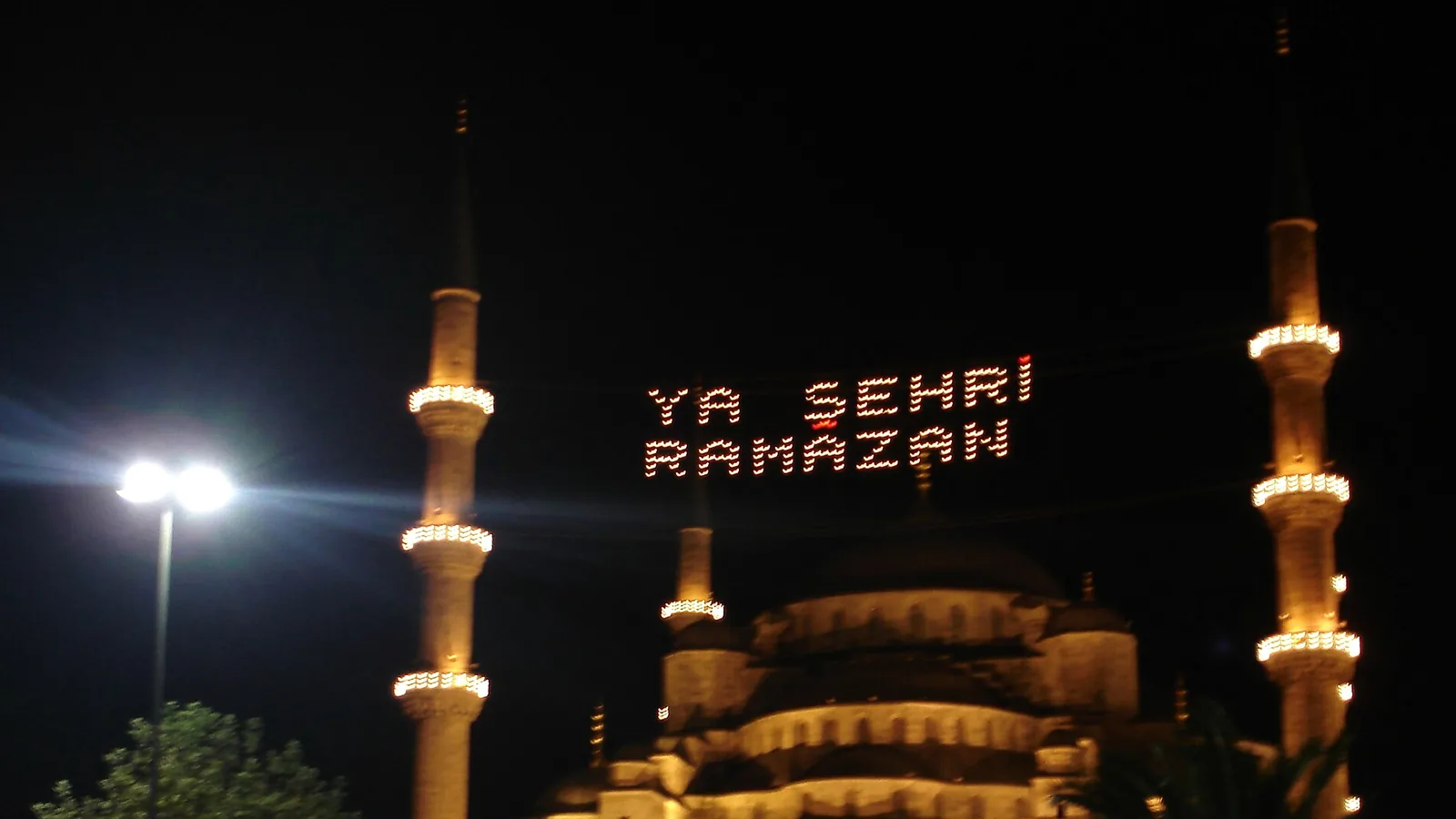
For one month a year, Sultanahmet changes rhythm. People gather around sunset to break the fast, strings of light may spell messages between minarets, and worship shapes access to the mosques more strongly than on an ordinary day. The exact programme, crowd level and opening arrangements vary by date. Here is what to plan for and what to verify before you go.
What changes on the square
Iftar. The square can become busy before sunset as residents and visitors prepare to break the fast. Public tables, tents or organised events are programme-dependent, so check the municipality’s current announcements instead of planning around a previous year’s setup.
Mahya lights. Illuminated inscriptions between mosque minarets are a long-standing Ramadan tradition. Displays can vary by year and mosque. Hagia Sophia and the Blue Mosque are both visible from our rooftop terrace; this is a terrace view, not a guest-room view or a promise of a particular display.
The evenings. Tarawih prayers bring a stronger worship rhythm after iftar. Markets, concerts and cultural events depend on the published programme. Treat them as possibilities to verify, not guaranteed nightly performances.
What changes for sightseeing
Do not assume ordinary opening arrangements remain unchanged. Mosque access follows worship, while museums, restaurants and public events publish their own schedules. Check Hagia Sophia’s current visitor information, the day’s prayer times and each attraction’s official notice. Around sunset, leave extra time for pedestrian traffic and restaurant demand; neither crowd levels nor table availability can be guaranteed.
Visitor etiquette
Visitors are not expected to fast. Many cafes and restaurants serve during the day, but individual hours vary. A few courtesies go a long way: be considerate around people waiting for iftar, follow each mosque’s dress and visitor rules, and ask before photographing people at prayer or at their meal.
Is it a good time to visit?
Our honest answer is yes, if you are comfortable planning around worship and a busier sunset period. Staying close to the square makes it easier to return to the hotel between visits without depending on another transfer. Ask reception for the latest local information when you arrive, but use official notices for prayer times, attraction access and public programmes.
Questions travellers ask
When is Ramadan in Istanbul?
Ramadan follows the lunar calendar, so its dates and daily iftar time change each year. Confirm the dates and Istanbul prayer timetable with Turkey’s Presidency of Religious Affairs close to your trip.
Can tourists eat and drink during the day in Ramadan?
Visitors are not expected to fast, and many businesses serve guests during the day. Individual opening hours vary. Near sunset, simple courtesy toward people waiting to break their fast is appreciated.
Is Hagia Sophia open to visitors during Ramadan?
Visitor access can continue, but worship always takes priority and arrangements can change around prayer, Friday and special religious dates. Check the current official notice rather than assuming the normal timetable applies.
Is Ramadan a good time to visit Sultanahmet?
It can be, if you welcome a stronger evening rhythm and plan around worship. Iftar gatherings and mahya lights are distinctive, while sunset crowds and changing access require flexibility.
Ramadan dates follow the lunar calendar and are confirmed by Turkey's Presidency of Religious Affairs shortly before the month begins. Check the dates and daily iftar times close to your trip, and see our Sultanahmet itinerary for the daytime plan. Programme-dependent claims reviewed 5 August 2026.
Changeable visitor and transport details were checked against these primary sources.
Last verified: Review scheduled by: